Showing posts with label Postal Reading Challenge. Show all posts

Monday, December 29, 2014

2014 Challenges Wrap Up & 2015 Challenge Roster

2014 was a year with a limited number of Reading Challenges on my plate. I signed up for a big one, the Century of Books project, so only took on a few others along the way. I'm very glad that I chose to do the Century of Books over two years, as there is no way I could have finished it in one! Because I'm still working away on the Century of Books challenge in 2015, I'm limiting the number of new challenges I am joining as well.

Here is how I did with my challenges this year.

Century of Books

Read: 55
Reviewed so far: 32
To read: 45


 Postal Reading Challenge

Oh dear, my own challenge, and I was a miserable failure! As a reader AND as host!
Read: Only 7/12 -- sigh. I had so many more on the TBR!


More Diverse Universe 

I loved jumping in with Aarti's September reading event. I read 3 books that were all interesting, Man by Kim Thuy, Plum Bun by Jesse Redmon Fauset, and Thomas King's The Back of the Turtle.


RIP IX

I enjoyed Carl's Ninth edition of the RIP Challenge. I committed to 2 reads -- but ended up reading 4! None of which were the original two titles I had considered...

This is always a fun challenge.


Dewey's 24 Hr Readathon

While the Readathon is more of an event than a challenge, per se, I was still happy that my schedule allowed me to participate this fall!

I read for 19 hours, and started 7 books, finishing 5. It was a lot of fun.


8th Annual Canadian Book Challenge

Last but not least, there is is the Canadian Book Challenge, one I perennially participate in. It is still ongoing, as it runs from July 1st - July 1st. So far, I've read 9/13. Lots more to come!


2015

So for 2015, I'm going to be primarily focused on two reading challenges, the Century of Books project, and the Canadian Book Challenge.

For the Century of Books, I have 45 titles left to read, and lots to review. I have plans...

For the Canadian Book Challenge, I have 4 more to reach the official total, but 33 more to read and review to surpass my personal best from 2013! So we will see...

These are the only 2 year-long challenges I'm officially joining in 2015. I will most likely still jump in on a few shorter ones, like the RIP, but I'll decide that when they arise. Good luck with all of your own challenges this year -- and remember, have fun!

Thursday, December 18, 2014

Postal Reading Challenge: Final Links & Finishes


Okay, so I've been a terrible Challenge host over the last few months. Thanks to those who are still reading along... I've added the final linkup here below. You can add any of your postal reads that you haven't linked up, as well as your wrap-up post if you're all done. Please do comment to let me know if you made it to the level you had planned on. 

Big announcement (which I'm sure will shock no-one)... I have decided not to run this challenge next year...not that my interest in epistolary fiction has changed, but I've found that challenge host is just not the role for me. 

BUT. On to the linky bits


Thursday, September 04, 2014

God is an Astronaut

God Is An Astronaut / Alyson Foster
New York: Bloomsbury, c2014
289 p.

I recently wrote a review of this novel for our local paper, the Stratford Gazette. You can find my thoughts below.

But for my blog readers, I also want to add that this book is a fine example of a modern epistolary novel. It's told in one-way emails, from Jess to her absent colleague Arthur (someone who is closer to her than we first realize). This one-way device adds some mystery and poignancy to the story, and I think as a technique it fits in quite well with Jess' character. Feeling alone and unlistened to, Jess would naturally write emails to someone who is -- or was -- there for her emotionally. Even though we see everything through Jess' eyes, all of the characters have a presence, though of course mostly in how they relate to her.

I enjoyed this one as a quieter read, with a focus on the internal shift that Jess is experiencing.


This review first appeared in the Stratford Gazette on Thursday, September 4th.

Jess Frobisher is all about plants; her husband Liam is all about space. Somehow they’ve always met in the middle – until now. Jess is a botany professor at a small college, and as the story opens she is madly digging up her yard to put in an enormous greenhouse. This greenhouse is fated to fail; just as in her wider life, growth and fecundity is stagnating. Liam, on the other hand, is in the midst of a maelstrom. His space tourism company, Spaceco, is being beseiged with press after their latest shuttle exploded after takeoff with four celebrity tourists onboard.

Jess wants to help, but Liam's propensity for secrets and emotional distance puts her at a major disadvantage. She is so thirsty for emotional connection that she talks to a reporter who has made overtures of friendship. This, as you might imagine, has vast repercussions on both Spaceco's crisis and on her marriage.

As this crisis continues, Liam jumps at an offer from a husband-and-wife filmmaking team to create a documentary about Spaceco and the families behind it. He’s hoping that it will result in some good PR spin. But being put in the spotlight (literally) changes the way the story unfolds for Jess and Liam.

The story is told in a series of emails that Jess sends to her colleague Arthur, who has gone on sabbatical to study trees in Manitoba. Yes, he is near Winnipeg, and there is some Canadian content here, including a discussion of the relative merits of Tim Hortons' doughnuts (or 'donuts' if you will). The format of the book – we see only Jess's one sided emails -- gives us a slowly expanding sense of the truth of all her relationships and of the major events that she is relating. As the emails get longer, and the story deepens, we see that sometimes our true desires are hidden even from ourselves, until they are suddenly there in black and white.

It’s an engaging read, set just far enough into the future that space tourism is a reality, but also very grounded in our everyday normality. Jess writes her way through a dramatic midlife crisis, and makes her way through to the other side, taking readers along for the ride. Readers who enjoy getting to know their characters well will want to pick up this book.


Further Reading:

Shine Shine Shine by Lydia Netzger has a similar setup with an emotionally distant, space-focused husband and increasingly anxious/unsettled wife. It also focuses on character and relationship.

If you enjoyed the format, and the theme of a woman in an uncertain midlife marriage, try Wife 22 by Melanie Gideon next, a story told in emails, facebook updates, texts and more.

Monday, September 01, 2014

Postal Reading Challenge: September


Any Postal reading, or letter writing, during September can be shared here. Here's to some great discoveries!


Saturday, August 16, 2014

A Woman of Independent Means

A Woman of Independent Means / Elizabeth Forsythe Hailey
New York: Viking Penguin, 1995, c1978.
256 p.

This is an epistolary novel that I'd first heard of thanks to Nymeth at Things Mean a Lot, a few years ago now. But I found a copy at a library sale this week so finally got a chance to read it.

It tells the life story of Bess Steed through her letters, from 1899 when she's in 4th grade, until her death in her 70s. The letters are written to various people, so they reveal different aspects of Bess -- her voice and her subject matter changes with each correspondent. She comes across as restless, bossy, self-interested, a large character who is trying to stretch the boundaries of the social expectations which constrain her, but is also not willing to totally throw them over -- society means too much to her.

Bess has three children with her first husband, her childhood sweetheart. She is intensely involved in their lives, leading to estrangement when they are grown, which fortunately isn't total; they do return to relationship. But Bess is a very strong personality, and her opinions aren't always comfortable ones. She likes to travel and explore, but at the same time she is bound by her decision to marry again, a decision she feels is forced upon her by her children's longing for a father and the persistence of her suitor, Sam Garner, an unimaginative engineer who lacks her travel gene, at least for anywhere outside the USA.

At the beginning of the book, Bess feels as if her life is charmed; in one early letter she describes how her night train rushed through a forest fire, without being harmed, and she is like that, travelling untouched through tragedy. But this doesn't last long -- she loses her first husband to the Spanish Flu after WWI, she loses others and has various tragedies following on. It began to feel a wee bit contrived, especially as Bess doesn't seem to change very much through all of this.

I did find that this book captured my interest -- the years that Bess lives through are years of enormous change, socially, politically, technologically. She is avid to know what is happening and changing, and stays informed and interested in life until the end. But she is also complex and despite being so vital, she has blind spots of selfishness and privilege that are unchecked. I don't think she'd be a very comfortable person to be around for long!

The epistolary format worked well for this story, as the focus is entirely on Bess. She reveals the changing nature of her inner thoughts through her writing, saying to her daughter at one point that "only in a letter do I dare express my feelings openly." She is someone who is compelled to write things down, which explains the wealth of letters. Of course, people did write many more letters in the past, and the number of letters gathered into this story would not be unusual to find in many lives of an earlier era. The changing tone of the letters and telegrams, depending on whom they were written to, also adds depth to Bess' character.

However, the intent of the book, in the foreword to my edition, was stated as describing how a woman could be independent within a domestic setting. The author decided in the 1970s that she wanted to write a novel called "Letters from a Runaway Wife"; ironically, her husband told her that runaway wives were a passing fad and that she should write about "a woman who didn't have to leave home to be independent", like her grandmother. The author thought about this and decided he was right (quelle surprise) thus wrote this book.

I don't think that this intent is carried out very effectively. It is as if Hailey is at war between her original impulse and the one she feels obliged to carry out on her husband's instruction. Bess is indeed a woman who doesn't leave home, if by that it is meant that she remains a wife. But her second marriage is one that she takes on partly out of duty and compromise; it's not a satisfying partnership. She doesn't stop travelling alone to Europe, or stop having passionate interest in other men. There are at least two, perhaps three, affairs in the story, revealed obliquely. Bess likes men, she doesn't like being tied down or restricted in her independent choice of actions. As she says:
It seems unreasonable to expect—or indeed even to want—to share every experience in life with the same person.... Why does society restrict a man and a woman to only one such pledge per lifetime? I hope I will never break any promise once made, but if I were free and clear at this moment, I would never again promise my exclusive devotion to anyone.
That doesn't sound to me like someone happily independent in a domestic setting. So while I found this book very readable, I felt that Bess' character was restrained both by her social setting and era, and by the author herself. I'd love to see this redone with the author free to write whatever she truly wanted to in the first place.

Nonetheless, I enjoyed reading about Bess and the numerous pithy things she comes out with in her letters. If you are are interested in a glimpse of the 20th century through the eyes of a strong willed woman ahead of her time, do give this a try. As an epistolary novel it succeeds in its structure, and there is much to enjoy in it despite the feeling I had that it didn't go quite far enough.

I'll close with a couple of favourite excerpts:
How wise we would be to multiply all our pleasures in life through the simple act of reflection, allowing memory to serve as the mirror in which the original moment can be recreated at will. I feel with Wordsworth that an event “recollected in tranquillity” has an intensity it often lacks in the present. My stay in Europe is at an end but I expect to make the trip many times in memory, unencumbered by children and baggage.
We all have the power -- at least for a moment -- to shape our environment, and how wrong of us to ignore this privilege just because it is fleeting. We must accept the fact that nothing we create belongs to us forever and let the act of creation be its own reward. 
But do not count on others to convince you your life matters. All of us are finally alone with only a single opinion to sustain us -- our own.


Friday, August 08, 2014

Address Unknown: a rediscovered classic

Address Unknown / Kathrine Kressman Taylor
Washington Square Press, 2001, c1938.
64 p.

I picked up this book in a recent used book store shopping trip; it was a tiny volume slid onto the shelf and I'm just lucky that this title was one I'd lately put on my "to-read" list, so it caught my eye, squished in there.

It was first published in 1938 as a short story, in Story magazine. It was a huge phenomenon then, and I can see why, even as I read it now. It was sparked by Taylor's curiosity as to the effect that Nazism had on otherwise nice, normal Germans; how did it take hold?

The story is told through the exchange of letters between two business partners, Max Eisenstein and Martin Schulse, who are art dealers in San Francisco. As the story begins, in 1932, Martin has just moved his family back to Germany, where they are very well to do compared with those who've been living in a depressed economy since the end of WWI. At first, Martin mentions some hesitation about this new leader of theirs, Adolf Hitler; although he seems to have a lot of energy Martin hopes that it will lead Germans in the right direction. But his letters quickly change tenor.

His old friend Max, a Jewish American, becomes more and more alarmed at the change. Max also has a sister, Griselle, who is an actress in Europe, and who had a brief romance with the married Martin in the past. Things come to a head when Griselle takes a job in Berlin, against Max's advice, and then one of her letters is returned to him, marked "Address Unknown". In a panic he appeals to Martin to investigate, not being able to believe that Martin has been wholly changed. Things get pretty ugly from there.

Within these 64 pages, Taylor is able to illuminate the atmosphere in a newly Nazi state -- the paranoia, the conformity, the pure hatred and self-interest that prevails. The story is relentless, with Taylor not backing away from the horrific realities of Jewish-German life at this time.

It was a shocking read, a perfectly constructed story, an unblinking condemnation of Nazism, and a must read in every sense of the word. I don't know what I was expecting, but this is a powerful story, one that makes clear how much everyone knew about what was going on in Germany by the early 30's. It's one I can't stop thinking about.

Monday, August 04, 2014

Letters to Anyone and Everyone

Letters to Anyone and Everyone / Toon Tellegen
Boxer Books, 2010, c1996.
156 p.

And now for a break from all the mystery reading...I picked up this little book on a recommendation from Stefanie at So Many Books, who thought it was charming. I must agree! This was a delightful, funny, lovely book. I read it via Interlibrary Loan, but know that I'm going to have to buy myself a copy soon, so I can reread all these tiny epistolary stories over and over.

It's a collection of children's stories by Dutch author Toon Tellegen (who is new to me). They feature Ant, Squirrel, Elephant, Bear, Sparrow, and occasionally Snail or Carp or Crow, among others. These animals are always sending letters back and forth, letters who wear hats and scarves and trudge between homes, or fly through the air. The stories are odd and quirky in the way of childhood games, or dreams, with everything being sentient, and strange happenings taken for granted.

Between Elephant swinging on lampshades or falling out of trees, or Squirrel writing a letter to the letter, or Cricket making things real by writing them down, there are numerous moments of laughter and charm. Some of the stories made me laugh a lot, some were rather melancholy. Each of them was worth rereading more than once. I regretted that I had to return this one; it's one to keep and dip into regularly.

The small "pocket" size of the book and the accompanying tiny illustrations by Jessica Ahlberg make this a perfect package. All these elements work together to create a wonderful reading experience, one I highly recommend. It's perfect for those who like charming children's stories, or epistolary fiction, or just discovering things that are slightly different.

This book, and a second, are examples of the few Tellegen books translated into English. Do search them out; they are a delight. You might also want to pop on over to Boxer Books and watch the brief interview with Tellegen and Ahlberg, and enjoy him reading excerpts from his book!


Saturday, August 02, 2014

Postal Reading Challenge: August


Hello all, it is August already. Yes, I've realized that I never posted a linkup page for our July readings. SO -- this linkup will be for July and August -- please feel free to add those titles from July right away, and keep adding until the end of August at this page. So sorry for that oversight, hope you still found lots of good reading!


Monday, June 23, 2014

The Stamp Collector

The Stamp Collector / Jennifer Lanthier; illus. by François Thisdale
Markham, ON: Fitzhenry & Whiteside, c2012.
32 p.

I read a lot of picture books in my work. I've found some excellent favourites and love a lot of my discoveries. But I don't often share them here, as my blog is focused on my personal reading, and not so much on children's lit. But. Sometimes something just meshes with my interests and I have to share! This book is one of those titles. It came to my attention because it just won the 2014 Golden Oak award, an award that is aimed at new readers in adult literacy and ESL programs, letting readers choose the winner. (it's another award in the OLA's Forest of Reading.)

 The book is focused on the power of story, and the power of letters. Here's the summary from the publisher:
A city boy finds a stamp that unlocks his imagination; a country boy is captivated by stories. When they grow up, the two boys take different paths—one becomes a prison guard, the other works in a factory—but their early childhood passions remain. When the country boy's stories of hope land him in prison, the letters and stamps sent to him from faraway places intrigue the prison guard and a unique friendship begins.
This doesn't convey the beauty of the book, though. That prison guard loves stamps, and saves them from all the letters sent to the political prisoner -- even eventually giving the prisoner hope by slipping him a stamp. The two develop a friendship of sorts, and as the prisoner sickens while in captivity, the guard becomes his link to get his new story out into the world. They are together in the end, guard holding the prisoner's hand as he dies.

Yes, that's right, the prisoner dies. And I was weepy! This is a powerful book that would work well with kids 9+ or perhaps Grade 3+. Often we don't think of picture books for older kids but there are so many that are really suited to older readers. This is a great book to read together with someone, and as we can see from its most recent award, it's great adult content in an easier to read format for those learning English, a book that has experience relevant to some newcomers' own.

The illustrations are beautiful, as well, with stamps appearing on nearly every page (in one of my favourites, a stamp appears like a kite). It's done in blues and blacks and greys and browns, very suited to the prison setting, but the stamps are bright jewels among the shades. If you love books about letters, as I do, you will really love this. And if you love books about powerful moral actions and political censorship, you will find this hard-hitting and very moving. An excellent choice to share with other readers.

Sunday, June 01, 2014

Postal Reading Challenge: June


I hope you are all still reading along with the Postal Reading Challenge -- and that you'll share your reading with us by using this link up!


Friday, April 04, 2014

Postal Reading Challenge: Linkups for April


Nearly forgot to post this link-up page! Please share any postal reading you do during the month of April!


Thursday, January 02, 2014

Griffin & Sabine, Continued

I reread Griffin & Sabine last summer, many years after my first experience with it. I really love the way these books are made: with lots of beautiful illustration, with letters that slide out of envelopes, typed or handwritten in a lovely brown fountain pen ink. I love the sense of discovery, and the love of all this ephemera. So I had to continue with the next two books in the story of Griffin & Sabine, which I fortunately own with all pieces intact.

Sabine's Notebook
San Francisco: Chronicle Books, c1992.
48 p.

Part two of this trilogy follows Griffin's travels as he leaves London, afraid to meet Sabine who is coming to him. His letters to her are sent from locales all over the world, Tokyo, Alexandria, etc. with appropriate postcard designs and stamps. Sabine's letters come in reply from Griffin's flat, where she is staying. Her comments on his neighbours and London in general are interesting, showing us Griffin's surroundings from a whole new perspective. The only slight problem is in the speed of correspondence -- Griffin keeps moving around, yet Sabine's letters always get to him at general delivery in his many cities. But this is a problem in many, many epistolary novels; how realistic do we want a correspondence to be? Should we expect the inclusion of dull daily details or focus on how long it has been between letters, or simply enjoy the story?

This volume ends in mystery as well, though, as Griffin returns home to find that nobody had been in his flat and his questions make his neighbours think he's going mad. Meanwhile, Sabine writes a letter expressing disappointment that he never came home when he said he would -- she's now back in the islands, the two of them having missed each other in passing again... but how?

I still enjoyed this one, though Griffin's character was getting on my nerves a bit. He seems fearful and a bit spineless, so afraid to meet Sabine in person. And yet, he is beginning to have the same mental connection to her as she has to him, and they are falling madly in love. Which is odd since they've never met.


The Golden Mean
Vancouver: Raincoast Books, c1993.
46 p.

Part three: Griffin is home in London, Sabine is with her parents. Her father is ill and has attracted a new friend/colleague while Sabine was away,  Victor Frolatti. This character is a professor eager to study the mental telepathy between Griffin & Sabine -- but how did he ever hear about it? What does he know? He's relentless and threatening to Sabine, and also begins writing to Griffin.

This twist kind of lost me. Frolatti is described as having oily blue-black hair and piggy eyes, and sounds to me so very much like the scary Italian foreigner described in so many Victorian penny dreadfuls. It put me off a bit, in addition to Griffin's violent language regarding Frolatti in his letters. He seems to want a macho confrontation, but considering he spent the entire previous volume avoiding Sabine, I can't really see him confronting anyone.

In any case, Griffin & Sabine appear to solve the mystery of why they can't meet in either of their home -- they decide to meet halfway, in Alexandria. From whence they've never been seen again...until..........

Well, I guess the last volume ends in mystery once more. I lost interest in this last volume, though. The storyline is slight, but the point of these books really is in the visuals, not the plot. The letters and cards and stamps are once again wonderful. I love Sabine's handwriting, and the effect of pulling actual loose sheets out of envelopes. That pleasure has been diminishing in real life as I write and receive fewer letters, and it was a delight to go through these three books and see how Bantock created this correspondence, and all the attendant stationery sets and so forth that appeared when these books were new.

For actual story, though, there are many far better choices of "correspondence novels".

Tuesday, December 31, 2013

Postal Reading Challenge 2014: Gateway to Links

This is the place to find all the relevant links for the Postal Reading Challenge 2014.


Postal Reading Challenge SIGN UP POST  including rules and information


 Postal Reading Challenge Quarterly LinkUps, January-March

 Postal Reading Challenge April Linkups

Postal Reading Challenge May Linkups 

Postal Reading Challenge June Linkups

Postal Reading Challenge July & August Linkups

Postal Reading Challenge September Linkups

Postal Reading Challenge Final & Finishing Linkups

**********************************

2013's Postal Reading Links if you'd like to explore them for reading suggestions

Postal Reading Challenge January-March LinkUp

Have you begun your Postal Reading? This is the place to link up those reviews that you post between January and March. You can share your reviews or pictures/posts about the mail you've been sending out.


Monday, December 23, 2013

Postal Reading Challenge 2014: My List

As I'm hosting the Postal Reading Challenge, I thought that I should really create a list of possible reads that I'm interested in picking up next year. Hopefully some of these will inspire other readers as well.

So that this list won't interfere with the original sign up post, I'm sharing it here on its own. These are just a few of the titles that I'd like to search out next year.


1. Love, Nina: Despatches from Family Life / Nina Stibbe

This new book is made up of letters from Nina to her sister at a time when she was nannying for a family who had lots of literary pals -- sounds really fun, especially after reading this review at Pickle Me This.

2. Letters of a Portuguese Nun / Mariana Alcoforado

A classic and one I am really in the mood to reread. I first read this in university, and the only commentary I could find on it was in French, so my French got a bit better ;)

3. Letters of a Portuguese Nun: uncovering the mystery behind a 17th Century forbidden love / Myriam Cyr

But that leads to this book, fairly new, a study of the controversy behind the original letters (who really wrote them?)

4. Sabine's Notebook & The Golden Mean & The Gryphon / Nick Bantock

I reread the first volume of this artbook series this year, and need to read the next ones shortly.

5. Dear Enemy / Jean Webster

This is a follow up to Daddy Long Legs which I read many years ago and enjoyed then. Haven't read this one.

6. A Woman of Independent Means / Elizabeth Forsythe Hailey

It's a Virago. No more needs to be said...

Sunday, December 22, 2013

2013 Challenge Wrap-Up

image via The British Library
on Flickr (amazing resource!)

2013 held a lot of reading challenges for me. I've always enjoyed taking these on even if I don't get close to finishing, although in 2014 I'll be limiting the number of challenges simply because of the scope of the Century of Books!

I didn't do too badly this year, though -- I read quite a lot. Actually I am surprised by how many of these I completed! Here is how I've done with my challenges.
**********

Canadian Book Challenge -- ongoing, as it runs from July 1 to July 1 (hosted by John at Book Mine Set)
**********
Colourful Reading Challenge -- hosted by Becca at Lost in Books
I finished this one! The challenge was to read nine books with a colour, any colour, in the title -- and I did it, just squeaking in with my last pick this week. My final list of colour books
***********
What's In A Name -- hosted by Beth Fish Reads
I've been doing this one for a few years now. I like the random categories and the varied reading they lead to. I finished this one, and much more quickly than usual! Here are the categories and my reads for each.
***********
Tea and Books Challenge -- hosted by Birgit at The Book Garden
The challenge here was to read massive chunksters. I read one supermassive tome with counted toward my goal of 2 books, Sir Charles Grandison (1600+ pages)
***********
RIP VIII Challenge -- hosted by Carl at Stainless Steel Droppings, running Sept 1- Oct 31
This seasonal challenge is always a delight. I chose to participate at the level of 4 books, but ended up reading 6. Here's the original challenge, and the books I ended up reading, plus a couple that I simply did not finish.
***********
This one challenged you to read 12 books that you've had on the shelves for more than one year. I have plenty of those, so signed up and actually completed the challenge :) I even read the 2 alternate titles on my list, though didn't make it to the full 20 I'd suggested I would. All the titles are listed and linked on the original post.
************
Wow, I failed miserably on this one. I need to focus on more good science reading! Lots of ideas for where to start at Jeff's website, too, so no excuses!

*************************

To finish up, I mustn't forget my very own challenge, the first I've hosted -- the Postal Reading Challenge! I finished up 15 epistolary books, and sent plenty of mail this year. I hope you'll consider joining in for 2014, too. You can get to all the reviews for books read by participants by following the links at the 'gateway post' (including my own). Or see the full run of my own postal reading and comments on the post here.

Wednesday, December 18, 2013

Letters From Skye

Letters From Skye / Jessica Brockmole
New York: Ballantyne, c2013.
290 p.

A quick and dirty review of this one: I read it for my own Postal Reading Challenge, and was very strongly reminded of the Guernsey book. It's set during the two wars, following Elspeth beginning a few years before WWI, with her daughter Margaret adding to the narrative at the beginning of WWII, when Margaret must go back through letters to discover her mother's past.

I liked it, and especially liked the character of Elspeth. She was interesting and quirky and I was fond of her at the start. But I wasn't overwhelmed by this book, probably because I didn't like David much, and their correspondence felt a little too contemporary and American to me. The tone was far too open and confessional. Plus the reader's emotional investment in the buildup of a relationship between them through their letters was a bit shattered when Elspeth casually mentions that she is married...what? That is kind of an important fact to know from the beginning.

Also, I'm not a big fan of the 'crossed wires' storyline which results in two characters who are meant for each other to waste 20 or 30 years apart because of a simple misunderstanding which could have been resolved with a bit of gumption and research in the first place! But that's just me.

Anyhow, it was interesting, and the setting was really lovely. The concept was good but the letters didn't hit the right note for me. I preferred the openness and insouciance of The Guernsey Book, which avoided the emotional hand-wringing that permeated this story. It was not a bad book, but not one I'll ever reread either. But I absolutely love this cover :)

Tuesday, December 17, 2013

Postal Challenge 2014

After much thought, I've decided that I'm going to to host the Postal Reading Challenge again in 2014. With all the depressing news here in Canada right now, about our mail service ceasing door to door delivery and raising our already high postage rates even higher, I think that the idea of handwritten, posted letters needs all the help it can get! I still love writing and receiving mail, and reading about it as well. I hope that some of you will join me in this year's reading.


The rules will be much the same as the first go-round...

What is the Challenge?

The key is to read and review books with a postal theme. These can be non-fiction on the subject of letter writing, collections of real letters, or epistolary fiction of any era. Be creative! Review each one and link back to the challenge -- there will be quarterly roundup posts for you to link reviews and posts to as you create them.

The challenge runs from January 1st, 2014 to December 31st, 2014.  You can sign up ANY TIME throughout the year.

Any books chosen can overlap with any other challenge, and rereads are allowed. Just remember to review them somewhere online in order for them to count toward the challenge. Lists don't have to be made in advance, though feel free to share your choices and inspire other readers if you wish! I always think that making lists is half the fun :)


How do I join in?

There are a few ways to participate in this challenge. 

Postcard Level:   Read and review books with a postal theme.

Snail Mail Level:   Read and review 8 books with a postal theme.

Parcel Post Level: Read and review 12 books with a postal theme.

Air Mail Express Level:   Read and review 12 books with a postal theme AND commit to sending more old fashioned letters this year. At least 12 pieces of mail (or more!), and you can share numbers or even images of your mail art in the quarterly roundups.


Anyone who completes the challenge at any level will have their names thrown into a draw to win some letter-related goodies at the end of the year. In addition, if you complete the Air Mail Express Level, you'll get a chance to win a lifetime membership to (and some goodies from) the Letter Writers Alliance!


Need ideas about what to read? Check out the links at last year's sign-up post, or scroll through some of the epistolary titles that were reviewed in 2013.


To join in, sign up below. If you aren't a blogger, just add a comment. How to add your link: 

1. Click on the icon below
2. Add a link to your sign up post or your overall blog/tumblr/Goodreads page, etc., if you are just joining generally for now


Monday, November 04, 2013

Postal Reading Challenge: Reminders and reportage


My October was a whirlwind, and I neglected to talk about the final quarter of the Postal Reading Challenge!

If you've been reading along as a participant, don't forget to add your reviews and final roundup links to the appropriate posts -- and if you think you want to jump in now and get some epistolary reading in before the end of the year, you can do that too! -- all the links to sign up, wrap up, and link up pages can be found on the "gateway" post for your convenience (found any time by clicking the icon in the sidebar)

The Postal Reading Challenge has been really enjoyable, and has multiple levels for participation -- from 4 books over the year up to 12 books, as well as writing your own letters too. I'm sure that with Christmas card season coming up, each of us will be able to meet the "send 12 letters" part of this challenge easily (if you still send actual cards of course, which I do)

I'm thinking about next year's challenge already, and possible adaptations and additions...I'll post something soon about that.

For now, I wanted to share some new finds and inspiration for those of us intrigued by the epistolary tradition. Some books to track down, and some letter-ish goodies to covet!

First off, check out some of the neat things on my Going Postal Pinterest board -- I try to add new things to this all the time. This is one thing I particularly love:

Postal Print Scarf

I also have a Postal Reading Challenge Pinterest board set up, so feel free to like and share from the titles read by our participants in that way too.


Now here's a brand-new book that I just came across today: To The Letter by Simon Garfield. It's an instant must-read. Great subject, of course, and the author also wrote a marvellous book about the discovery of the synthetic colour Mauve a few years ago. I loved that book so have great hopes for this one too; his writing style is very accessible and he seems to notice all the social implications of his topic, so I know this is a book I am going to have to get my hands on!


Good luck to everyone finishing up their postal reading, I hope that I'll see a few more reviews in before year's end. Please share any fabulous epistolary finds you've made recently in the comments, as well!


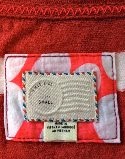
And here is the very cute clothing label that references our postal theme, mentioned by Suko in the comments below. She was kind enough to send a photo to satisfy my curiosity -- hope you enjoy too.


Friday, August 16, 2013

Staircase Letters

The Staircase Letters: an extraordinary friendship at the end of life / Arthur Motyer
Toronto: Random House, c2007.
160 p.

One more epistolary read, but this one is nonfiction. It's a collection of letters between Arthur Motyer, his friend Elma Gerwin and her friend, Carol Shields.

Elma and Carol have both discovered that they have cancer, and begin writing to one another about their experiences. Into this mix comes Arthur, a decade older but not ill, and at first uncomfortable about what he will able to helpfully share. As their illnesses progress, he finds his role, and the letters reveal the conversations that developed between all three.

He has gathered the email exchanges and letters between the three of them, as they talk about the small moments in life that continue on despite illness -- the basic questions of family gatherings, food, children's questions, writing and creativity, and more. Of course, knowing ahead that the letters have a terminus doesn't much help to prepare the reader. Elma, in particular, had a voice that caught me, and just as I felt I was beginning to understand her, news comes of her death. I admit I shed some tears at this point.

This is a small and short book, but it provides some insights into what these two women were thinking and experiencing as they dealt with their own cancer diagnoses. There was nothing unexpected or shocking, but it was still a moving collection. Motyer is clear that both of the surviving husbands of these women were fine with this publication, which I was glad to read, as the letters are a very personal exchange.

I feel faintly guilty about not raving about this collection, rather, I don't think it is a must-read for the topic. But it is still of interest, and opens a window onto the lives of two writing women.