Showing posts with label war. Show all posts

Friday, February 20, 2026

Ordinary People Don't Carry Machine Guns

Ordinary People Don't Carry Machine Guns/ Artem Chapeye
trans. from the Ukrainian by Zenia Tompkins
NY: Seven Stories Press, c2025. 
128 p.

 Moving from yesterday's 1920s Kyiv to 2020s Kyiv with today's book. This set of essays by Artem Chapeye is a straight-talking, angry book about war and the way it affects a society. It was so powerful and striking in many ways. 

Chapeye was a leftist pacifist prior to Feb 22, 2022. But the reality of an invasion of his country led him to enlist shortly after the invasion began. He has been serving in the army since. 

The book is divided into three parts: “When Darkness Comes”, about the beginning and the incomprehensible reality of war arriving in a modern European country, and the way it immediately shook everything up. “It’s Necessary to Cultivate Your Garden” takes a look at everyday Ukrainians, their survival strategies and hopes for a return to a peaceful future. Then, “People Aren’t Divided into Brands" which examines the problems of elitism and the attitudes between different levels of Ukrainian society - how those who haven't enlisted often say that they can help elsewhere, with overtones of them being more important than those on the front lines. Chapeye has years, now, of serving in the army, and he worries about his wife and children, his country, and more, even as he doesn't waver from his role. 

I found Chapeye's earlier book, The Ukraine, memorable; a mix of fiction and reportage, it was published just as he had enlisted. This book is darker, more grounded in daily experience of war and the social issues it aggravates. It's a must read, as a fluent report of the day to day life of a Ukrainian soldier, one who is also an accomplished writer and journalist. Hard to read but so vital. 


Thursday, February 19, 2026

The Sunflower Boys

The Sunflower Boys / Sam Wachman
NY: Harper, c2025.
352 p.


This novel, published as YA, is by an American writer with Ukrainian roots. It follows two young boys, Artem and Yuri, as the full scale Russian invasion arrives in Feb 2022. Their father is working in American, sending money home, while their mother and grandfather take care of them. 

Artem is an artist, drawing in his sketchbook constantly. He is a regular boy, with school hijinks, games, friends and so on. But as this book opens, he is realizing that he is also falling in love with his best friend. This theme of identity and self-awareness runs throughout the book, but there are bigger things to worry about once Russia arrives. 

After the first few days of hiding in the basement with the rest of their apartment neighbours, their mother decides that they are leaving the city to go to their grandfather's farm in the country. This seems like a good plan but it turns out to be a tragic decision. There is a horrific scene when the Russians find the house; it was very graphic and terrible, and perhaps readers should be aware that there is violence and terror in this book as well. 

Artem and Yuri escape and make their way across a hellscape of cold, dark countryside, trying to get to a city so they can flee to Kyiv. Eventually they make it, their father finally gets back into Ukraine and finds them, and they end up in Florida in the last chapters. But this trek is endless, full of difficulty, fear, hunger - and also the help of people they find along the way. Artem and Yuri stick together but as the elder brother, Artem is more permanently affected by his responsibility and awareness of what's going on. 

This was a striking and realistic read, a war novel that describes the realities of civilians caught in the middle of this invasion. It's also a humanising one; Artem's life and other concerns are still important to him, everything is not wiped by war coming. It was a powerful read, but readers should be prepared for some traumatic scenes, as Wachman doesn't hold back on the horrors of war. 


Saturday, September 27, 2025

A Small Stubborn Town


A Small, Stubborn Town / Andrew Harding 
London: Ithaka Press, c2023.
140 p.


I read this one a while back, and have been hesitating to review it. While I thought it was interesting and certainly topical, it also felt a bit lacking in context, being written by a British journalist, and being fairly short. It feels more like it should/could have been a long article rather than a book -- there was room here to add a bit more, to flesh out the story a bit. 

However. I still found it an interesting read, with a lot to say about the town of Voznesensk in southern Ukraine. As the Russians invaded in 2022, their route came through the town - where they were expecting to roll through with no trouble. But the locals didn't think that was a plan they were going to get behind. So they did what they could to stop or slow down the movement through their town. 

There were pensioners, young men, lawyers -- ordinary people -- who stepped up to defend their town and by extension, their region. There were men who had volunteered for the Territorial Defense, but never expected to actually have to defend anything. 

It's written from the viewpoints of many of the residents, but primarily a grandmother, Svetlana, whose lazy husband and son have joined in on the defense as well. She is Russian who had come to Ukraine as a child, and can't quite believe what is happening. But she was now clear on who was "her side" -- the locals. 

It's a fast-moving, tightly written story, and as I mentioned, fairly short. It certainly keeps the reader's attention throughout, and touches on the personal stories and relationships between Russia and Ukraine. I found it a little too sympathetic to the Russian forces in some ways, but after three years of evidence I hope that readers can draw their own conclusions about invaders.

Anyhow, I did like it overall, and thought that the defense of the bridge in Voznesensk was a gripping story. Another angle on what happened in the first few weeks of the invasion. 


Saturday, August 30, 2025

A Crash Course in Molotov Cocktails


A Crash Course in Molotov Cocktails / Halyna Kruk
trans. from the Ukrainian by Amelia M. Glaser & Yuliya Ilchuk
Cambridge, MA: Arrowsmith, c2023.
192 p.

I wanted to read some poetry for Women in Translation Month; this volume is one that I've had on my list for a while. I finally got a copy, and have been working my way through it over the last week. It is published with the original Ukrainian on the left hand page, and the English version on the right. I really liked this, even though I can't read Ukrainian myself - but it would be a really great element if you did. As it is, I still feel it added to the reading experience; there was the original poem, breathing right in front of you. 

These poems are stark, responding to the outbreak of full scale war in 2022. There are metaphors and imagery that evoke the visceral experience of living with violence and upheaval, and emotional threads that pull you in despite the brevity of the lines. This collection is powerful and moving, but also quite accessible, I thought. The poems are shorter, and are addressing universal concerns about war, life, literature, choices, through the lens of the Ukrainian experience. 

There were a couple of poems that really stood out to me, but all of them were solid - I don't think there was a weak link in this collection. There are stark statements about violence and death, and about the span of history; Kruk uses the Ukrainian past to illustrate the present in so many ways - from one poem:

we stopped digging deep long ago

in this uncertain field of ours-yours

because all kinds of junk can turn up:

human bones, horses’ heads, unexploded mines,

a battle ax, the peg that marked the border

between our side and yours...


There is so much to reread and think on in this collection. I would recommend it for anyone interested in poetry and how it both faces and repudiates war. 

You can read quite a bit of her poetry online; there are a few shared at LitHub, and there is a nice sampling from this book at the Griffin Poetry Prize site, where she was a nominee in 2024, both poems and video.

You can hear both Kruk and her translators read one of the poems, thanks the to Griffin Poetry Prize (this was a nominee) 


 And you can also listen to a lengthy interview with Halyna Kruk if you want to find out more about her writing and her poetic response to war, in this video from Razom.


Monday, December 16, 2024

A Sea of Gold


A Sea of Gold / Patricia Polacco
New York : Simon & Schuster, c2024
86 p.

I picked up this recent picture book in my library, for obvious reasons. It's about a family in Ukraine who are displaced by war, ending up in the US Midwest with relatives. 

But it's really not so simple. It focuses on three generations a family living in Cherinovska, Ukraine, who are sunflower farmers. The first generation marries and sets up a new farmstead; their daughter then marries and does the same. But their daughter ends up traumatized by war, only speaking again once she is in America with her great-uncle, once again planting sunflowers. 

This book started out just okay for me; the writing style is dense and expository, much like Polacco's other books, which I think are suited for older readers or for parent-child reading experiences. The illustrations are instantly recognizable as Polacco's work, with the loose linework and bright colours that are her hallmark. Really engaging, especially with all of the historical content around weddings and rituals - great opportunity to show off finery and colour. 

But what I didn't expect was the growing emotion in the story; by the last few pages I found myself unexpectedly moved. It was a powerful ending, to what is a pretty tragic story. After the men in their family do not return home when Russians bomb the nearby village, the three generations of women flee, eventually finding refuge with the grandmother's brother in America. But there is still their shared history to carry them through. 

I think this is a timely read, showing the lengthy history of war and trauma experienced by Ukrainians at the hands of Russians, happening now once more. But there is also the love of family, and hope that finishes off this story - based on Polacco's own Ukrainian heritage through her grandmother. Really touching. 

Tuesday, August 06, 2024

Twenty Two Letters from Ukraine


Twenty-Two Letters from Ukraine / Katya Tokar
trans. from the Ukrainian by D.B. Lewis
Scarborough, North Yorkshire, UK: Bryn Stowe Publications, c2023.
258 p.


Another unusual pick from me, this time it's non-fiction. This book is a series of letters written by a young Ukrainian woman over the course of the first few months of the full scale Russian invasion of Ukraine starting on February 24, 2022. 

The book is structured in letter format, written from her immediate experience or related slightly later from her journals. It has an immediacy that makes the mundane and everyday issues of war and internal displacement very real to the reader. Tokar shares the experiences of her family - her husband, mother, little sister, and small dog, who all live together, and leave their home in Eastern Ukraine to drive west, along with many others. The life of an internal refugee, trying to find a place to resettle even briefly, sounds very stressful. She's always on apps to try to locate hostels, shelters, etc. for the family to stay. There are a couple of places that they stay in only for a night or two, and a few more that are a few weeks at a stretch. 

Finally they decide that her mother and sister will cross to Poland, and then on to Ireland where they have a relative. But Katya is going to stay in Ukraine with her husband. 

I found it illuminating, the daily struggles of not having a home, job, or purpose. Trying to find safe places to stay, to feed the family, and worrying about money and their car. Not knowing what the future holds at all, or if she will ever be able to go back to being a preschool teacher, or have a permanent home again. The letters end after a year, when she and her husband move to Kyiv, first to stay with a relative and then finally finding their own apartment. 

She talks about her grief at being separated from her mother and sister, and worry about her husband in this precarious situation. It is an individual story, about one person, and this brings the scale of the war down to a very understandable event -- you can feel it. While the style is quite simple, there are some moments in which she talks about memory and having to leave the past behind where the writing is more powerful. This was a powerful read about real life experience, told by someone who isn't a writer but just wants to share the realities of life under war. 


Saturday, July 06, 2024

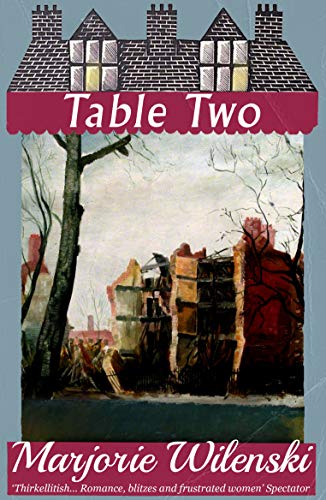
Table Two

Table Two / Marjorie Wilenski
London: Dean Street Press, 2019, c1942.
224 p.

This is another wartime novel but this one is set in WWII. It also explores working women during the war; we're meeting the women of Table Two, all translators working for the (fictional) Ministry of Foreign Intelligence. There are a full set of them, all types, from matronly to spinster, both women who have worked their whole lives and some rich volunteers doing 'their bit' for the war effort. 

The two that are most focused on are Elsie Pearne, a bitter middle-aged woman who has had to leave her important job on the continent due to the war, and is now constantly comparing her coworkers idiocy to her superior intelligence. She's blunt and unfriendly, and although her actual work is excellent, nobody else at Table Two really likes her. We learn a lot about her background and why she might be this way; the author seems to have compassion for her and although she is awful she is also the most real of all the characters. She reminds me of Katherine Brooke in Anne of the Island, although she is never brought back to social normalcy by the magic of Anne Shirley. 

But that brings me to the second main character, Anne Shepley-Rice. She comes from a formerly affluent family, and never expected to work. But here she is, sunny and delighted to make use of her skills with Portuguese. Elsie sees her as a possible friend, someone who isn't already turned against her, but as always she is far too intense and snobbish, and ends up damaging the fledgling friendship. 

Anne has a rich grandmother, some investments and a rich boyfriend to fall back on, so she isn't quite as intensely involved in the day to day of the office as some of the others. There is class tension between the 'workers' and volunteers, and dislike for Elsie generally, but this all gets ramped up into high gear when Table Two finds out that the post of Assistant Deputy Supervisor is up for grabs. 

This was a fascinating read. The office bickering is instantly recognizable to anyone, even during a war it went on. The story is almost all women, as well -- some of the men who toil away in management are barely seen and are flat characters in comparison. The ensemble cast has representatives of all sorts of people, and I would have liked to see more of that element and learn more about them, but the book couldn't go on forever. It opens a few days before the first bombing of London, and as it was written during the war, there is uncertainty as to the outcome. She describes the daily experience of living with bombings, spending lots of worktime in shelters, and carrying on despite it all. And since she was living through it all while writing this, there is an immediacy that is unbeatable. 

This one is definitely worth a read, even if it a bit uneven as a novel. Despite any of the dramatic flaws, this book captures women's lives in the midst of war, one that no-one knew the ending of. That's compelling. 


Monday, June 10, 2024

Words for War

Words for War: New Poems from Ukraine /
ed. by Oksana Maksymschuk & Max Rosochinsky
Cambridge, MA: Ukrainian Research Institue, Harvard U., c2017.
240 p.


This is a collection of poetry by 16 varied Ukrainian authors, with a nice mix of women and men represented. There are modernists, more traditional writers, new and young ones alongside more established names. It's a great collection. You can view Words for War and read pretty much all of it online; the site has much the same cool design feel of the book too. 

There is a comprehensive intro and afterword, as well as author and translator bios in the back. There are also notes on the places and events mentioned in the poems which North American readers might not be familiar with. This certainly adds to the understanding of the poems, and was appreciated. 

This was published in 2017, so it has many poems written shortly after the hybrid war started in 2014 when Russia invaded the east of Ukraine (the Donbas area) and annexed Crimea. Everything was clear then and yet it took a lot more for the world to pay attention. These poems are beautiful, harrowing, ironic, sad, blunt, angry, powerful, and much more. Anyone interested in the literature of Ukraine needs to become familiar with the poets, they are a strong element of the writing that shapes the culture. This is a good way to become familiar with a lot of names in a short time, and get a feel for those that resonate with you. For example, after reading Lyuba Yakimchuk's work in this collection, I requested her full collection Apricots of Donbas from my library system. Collections like this one a great way to expand outward. 

This book is also very nicely produced. The font is clear and readable and the image of each author at the beginning of their section is a artistically altered photo -- it's very appealing. I found it really well done and a must read for anyone new to Ukrainian poetry. 
 

Monday, March 06, 2023

Enemy Alien: a true story of life behind barbed wire


Enemy Alien / Kassandra Luciuk; illus. by Nicole Marie Burton
TO: Between the Lines, c2020.
140 p.

This is an interesting read -- it is based on the memoir of a Ukrainian man, but the authors note that it's not clear who exactly the author was. They've given the main character the name John Boychuk, partly because he's the most likely candidate for author, and because the name is a kind of "John Smith" name.

In any case, it is based in the first person, contemporary account of the experience of Ukrainians in Canadian internment camps during WWI. There were a number of these camps across Canada, with many new Canadians locked up because they'd come from Galicia, then part of the Austro-Hungarian empire. And in this book, it's also shown that other men, even some Americans, were randomly caught up in the sweep to intern anyone "foreign". The illustrations are straightforward, black and white, and clearly representative of the people and the camps.

For those of us who like to think that Canadians are wonderful, kind, sweet etc., we just need to take a look at our history (both older and recent) to see how that's a false narrative. These camps resulted in the expected behaviour that crops up when some men are put into a position of power over others - lots of sadism, abuse and everyday bullying by guards, including withholding food, or making men undress in the middle of winter and run around on a frozen lake until they agree to camp demands. There were men who died due to untreated illness, or who were shot trying to escape. This book focuses on the camp at Kapuskasing, which was full of only men, but there were also other camps like the one at Spirit Lake which interned whole families. The book also shows that once they left the camp, they were sent to factories and industries far away from their homes, as forced labour -- and the end of the war was not the end of this practice. 

If you didn't know about the internment of Ukrainians during WWI already, this is a good introduction to the topic. There is an introductory essay that is a few pages long, which situates the story and provides historical background to the issue and to the specific source for this story. There is also a page long bibliography at the end if you then want to read more on this subject. I would also recommend Barbara Sapergia's novel Blood & Salt, for a fictional look at Ukrainian internment in Western Canada. 


Sunday, March 05, 2023

Yellow Butterfly


Yellow Butterfly / Oleksander Shatokhin
Brooklyn, NY: Red Comet Press, 2023, c2022.
72 p.

This is a wordless picture book by an internally displaced Ukrainian artist, created in the first few months of the Russian invasion. It shows the realities of war and displacement, with black and white images of war and fear and barbed wire -- but with a yellow spark of a butterfly leading the isolated character through the pages, until it multiplies and grows, and in the final pages of the book we have a clear yellow and blue layout with hopeful figures standing together. The images are rough, with a lot of energy and movement in them. You can feel the unsettled atmosphere in the opening pages. But the conclusion has a joy and hope in it, which makes sense when you read the author's statement on the back cover -- that he believes Ukraine will prevail and that "yellow butterflies will flutter freely in free Ukraine".

If you haven't experienced many wordless picture books yet, there is also a helpful appendix included in this book. There is one page titled "Sharing a Wordless Picture Book" which gives tips on how to approach and engage with this kind of book, as well as how to share it with the children you're reading it with. It included lots of visual examination and imagination, and patience to let the images speak to you. Then there is a second page, "Guiding the Conversation", and that includes tips on engaging with the content of this book. It provides ideas to check in with children to make sure they understand, as well as listening to their reactions and providing room for conversation about tough topics. 

I think that these resources make this book way more useful for parents, teachers or anyone experiencing this kind of book, with this kind of heavy topic, for the first time. This is a book that could be used to better understand conflict and to open discussions on hard topics. Well worth checking out if it's available to you. 

Friday, December 09, 2022

The Paris Seamstress


New York : Forever, 2018
453 p.


I knew I was going to have to read this one at some point -- I couldn't ignore the title or plotline, in which a seamstress from Paris escapes to New York during WWII and starts up a fashion line. However, I am getting a little read out on the WWII stories these days and so had put this one off for a while. 

But this month I finally got to it. It was a pretty good read, although the plethora of "WWII in Paris" novels do start to kind of blend together at some point. In this one there is the added intrigue of famous people who our main character slowly finds out are linked to her in inextricable ways. Lots of family secrets, dashing spies, political intrigue, romance, and of course a lot of sewing.

I liked the balance among all these elements. Estella is a young woman working in a Paris atelier when the war begins, and as things get more dangerous her mother, also a seamstress, basically sends her off to America with the sudden information that Estella had an American father. Estella heads out, still in shock from this revelation, with a suitcase and a sewing machine -- although she hustles down to the port with the sewing machine "banging against her leg" in one hand and the suitcase in the other. I wonder if the author experimented with carrying a 1940s metal machine in a clunky carrying case in one hand for any length of time, when it's described like this. And at one point Estella whips up a glamorous gold evening gown from leftover lamé, about 2 yards worth, in about 2 hours after a long day of work. A real Cinderella moment; I wish I could sew that quickly with such a little bit of fabric! 

But other than those small moments that gave me pause, I found the rest of the book realistic and believable. Estella's story is dramatic, with many strong characters surrounding her - her mother, her two best friends she meets on the boat over to NY, a socialite who looks uncannily like her which leads to a friendship of sorts, and of course her dashing love interest. She also meets many real people, like Elizabeth Hawes (author of Fashion is Spinach) and other fashion leaders of the day. Plus a couple of notorious characters of NY fame; this part was leaned on extensively and I didn't find it convincing at all -- and wonder if there are any descendants of those people who might take issue with the characterizations! 

But like most of these WWII novels lately, the book also has a dual timeline format. Estelle's story starts in 1940, and to me is the much stronger part of the book. We also have a 2015 timeline, in which Estelle's granddaughter Fabienne is discovering her grandmother's secrets just as Estelle's fashion house is being celebrated with an exhibition at the Met in contrast to Estelle herself, whose health is failing due to age. Fabienne thus has to manage the discovery of many secrets on the reader's behalf, including her father's birthright, and the war experiences of her grandmother. Fabienne is, of course, also developing a romance with a tall, dark, handsome, rich and tragic man, even though he's based in NY and she's currently based in Australia. 

Oh, the tangled webs here! Lester is good at creating a complicated, interwoven set of relationships and plot points, which she then resolves neatly by the end. It's a little predictable and the drama is cranked up a little too closely to melodrama once or twice (at least for me). But the settings -- both Paris and lively New York (7th Ave, the Barbizon, the Met and more) are well drawn and the characters are memorable. Overall there is a lot of compelling detail in it, both generally and in more specific sewing areas. I did enjoy it, although I think I'll move on from the genre for a while now. 


Monday, November 21, 2022

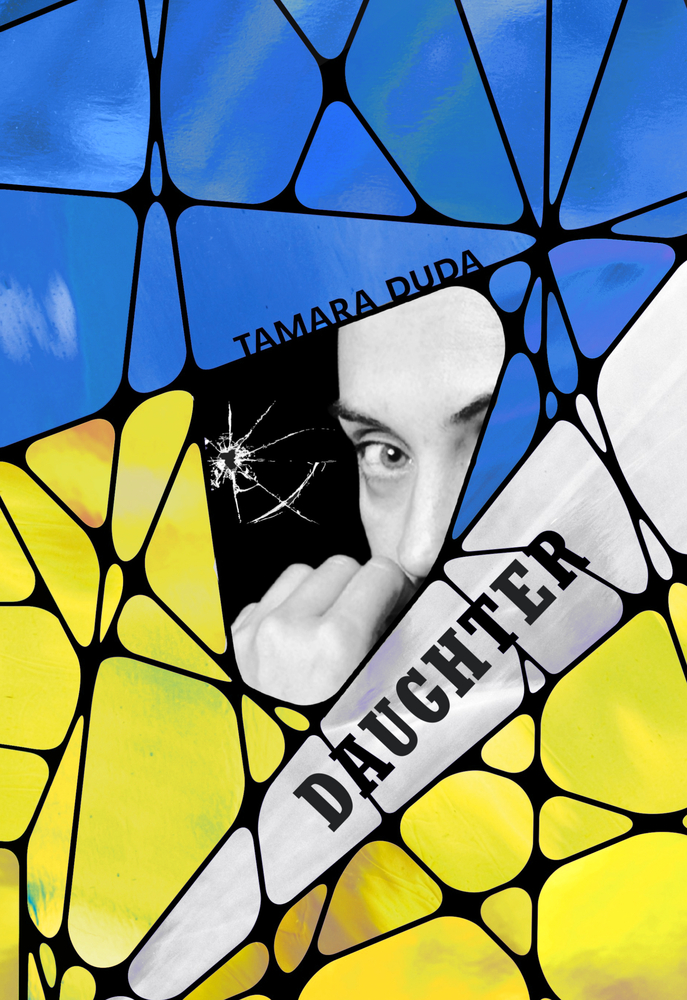
Daughter


Daughter / Tamara Duda
trans. from the Ukrainian by Daisy Gibbons
Oakville, ON: Mosaic Press, 2022, c2019
350 p.

This is a stunning read; it's the story of a woman from Donbas as the Russian invasion of 2014 begins, following the Maidan protests. She's a stained glass artist with a workshop, but as the Russian occupation begins she becomes a supporter of the Ukrainian defence forces, along with the men in her workshop. These artists start organizing logistics and getting clothing, food and supplies to the Ukrainian troops in the area. This requires much care; fake names online, braving their way through checkpoints, facing violence and potential for death with every mission. 

The story is based on the true experiences of a variety of people, and there is an afterword with those people telling their story in their own words. But the story is a fictional account of this era, and it's told in bare and straightforward prose, but is immensely compelling. It starts with 'normal' life, our main character working at a successful arts business and beginning to participate in the Maidan protests at the local square. She still thinks that these are normal days, but when she sees a protest become violent, with people killed right beside her, she realizes that life is changing. 


And at this point she must make her choice; many people in the city are waiting for the Russians to arrive to calm things down (ha!) but she decides that "ours" for her are Ukrainians. Luckily, her staff agrees, and they all work together in new ways as they begin to support the Ukrainians. Things are intense for a few months, and then as conditions get worse - her apartment is shelled, there is a lack of food, water, utilities in one part of town, but not another - there comes the realization that this isn't a short term effort, that it's going to drag on. This was published originally in 2019, by which time the conflict had been ongoing for five years; this year the story takes on even more resonance. 

It's a tough read in parts; Duda doesn't hide the realities of war - rapes, bombings, the downing of Malaysia Airlines Flight 17 in the summer of 2014 (particularly gruesome), torture, oppression. It can be difficult to read, but the grit and spirit of resistance is there. The ending is sad but realistic, and I think as we look back a few years from today's perspective, current events seem inevitable. 


The book is designed well, also. Each section/chapter has a black and white photo of the region on the first page, overlaid with the same kind of stained glass grid as the cover. It really does give it a documentary feel. 

I feel that this is a must read for everyone in the current situation. It's a powerful inside look at the daily reality of war and resistance. And it may give you some more context to understand the ongoing conflict. Highly recommended. 


Thursday, September 22, 2022

Grey Bees


Grey Bees / Andrey Kurkov
translated from the Russian by Boris Dralyuk
Dallas, TX: Deep Vellum, 2022, c2020
320 p.

I'm still busily reading books by Ukrainians and about Ukraine. This novel is the latest from well known Ukrainian writer Andrey Kurkov. I've read a few of his earlier novels, and found this one more somber and less fantastical than earlier reads. It's also a bit longer; it deals with serious issues in a more straightforward way. 

Sergey is a middle-aged beekeeper who lives in the Grey Zone, the area in the Donbas that has been occupied by Russians since 2014. His village now consists of Sergey and his childhood frenemy as the only remaining citizens. Their interactions reveal the presence of both Russian and Ukrainian troops on both sides. But as summer draws near, Sergey wants to take his bees to a location where the guns and skirmishes won't bother them as they gather their honey. So he packs the hives into his old car, and heads into Ukraine proper to find a flowery spot to settle for the season. 

First he stops in a small town and camps in a field, befriending the local shopkeeper. But his relationship with her upsets the men in the town, particularly a former combatant with some PTSD. So he moves on, and ends up in Crimea. 

This section is quite startling - it evokes a lush, beautiful landscape full of menace due to Russian invaders. His developing relationship with the family of a beekeeper he once knew (who has disappeared in one of the roundups of Crimean Tatars by the Russians) reveal the history of the area over the years of Russian occupation. It's stark and yet told in a gentle way; Sergey is a bit of a charmed man, simple and not very suspicious although alarms are always going off for the reader. 

The contrast between Sergey's stoic manner and the danger we as readers can sense really makes the book work. When he is pushed to leave Crimea, a group of local police take one of his hives in the night, and when it's returned he must pack up and head home to his village in the Grey Zone -- but there is something odd happening with the hive that was 'borrowed', and though it isn't explicitly stated, Sergey seems to finally wake up to the potential of danger and sabotage, and to the necessity to act in the face of oppression. 

It's a longer and slower read than some of his earlier work, but still has flashes of his trademark satire. It's a darker and more contemporary theme, however, and so feels more serious. Definitely worth a read.