Showing posts with label old favourites. Show all posts

Sunday, August 25, 2024

Favourite Short Stories from 10 Years of #WIT Month

2024 marks 10 years of WIT Month! I've been participating since its second year, so it's nine active years for me. To celebrate a full decade of promoting women in translation, I thought I would share a few of my own favourites discovered over the past ten years. 

Today's favourites are some short stories -- there are not as many titles here as previous weeks, since I don't tend to read as many story collections as novels. But these were some collections that I found memorable -- some funny, some haunting, some with great writing or characters or both!


Your Ad Could Go Here / Oksana Zabuzhko
trans. from the Ukrainian by Nina Murray, Halyna Hryn,
Askold Melnyczuk, Marco Carynnyk, & Marta Horban


Where the Wild Ladies Are / Aoko Matsuda
trans. from the Japanese by Polly Barton


The Lonesome Bodybuilder / Yukiko Motoya
trans. from the Japanese by Asa Yoneda

Variations on the Body / Maria Ospina
trans. from the Spanish by Heather Cleary


The First Prehistoric Serial Killer / Teresa Solana
trans. from the Catalan by Peter Bush


Sunday, August 04, 2024

Favourite Chunksters from 10 Years of #WIT Month

2024 marks 10 years of WIT Month! I've been participating since its second year, so it's 9 active years for me. To celebrate a full decade of hard work promoting women in translation, I thought I would share a few of my own favourites discovered over the past ten years. 

Today I'm sharing some of the big ones, the lengthy books that take some commitment, and all proved worth the time! 

First is The Museum of Abandoned Secrets by Oksana Zabuzhko (trans. from the Ukrainian by Nina Shevchuk-Murray). This is an energetic mix of history and contemporary Ukraine, dealing with secrets of the past, war, family legacies and romantic relationships. 


Cross-Stitch by Jazmina Barrera (trans. from the Spanish by Christina MacSweeney) is a Mexican story, which explores the role of female friendship, interspersed with the history of embroidery, to create a resonant feminist narrative.


The Seamstress of Sardinia by Bianca Pitzorno (trans. from the Italian by Brigid Maher) is one of my favourite kinds of historical reads -- ones that travel alongside a woman over her whole life, and this is a great example.


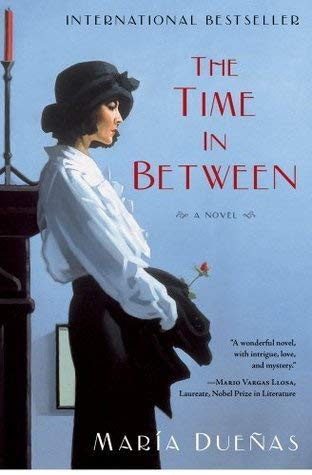
Another sewing related read (you can see my tastes!) is The Time in Between by Maria Duenas (trans. from the Spanish by Daniel Hahn). It's a sprawling saga about Sira Quiroga, a young woman who grows up as a dressmaker's apprentice alongside her mother, in prerevolutionary Spain, and gets involved in wartime intrigue. 


The Time of Mute Swans by Ece Temelkuran (trans. from the Turkish by Kenneth Dakan) is a beautiful, heart-breaking book. It's set in the tumultuous 70s & 80s in Turkey, and told from the perspective of two children. Sometimes this style doesn't work, but here it was perfect, and powerful. 


And my final favourite chunkster of the day is the stylistically challenging Flights by Olga Tokarczuk (trans. from the Polish by Jennifer Croft). Made up of smaller stories that eventually interlock in thematic ways, I'd say pick it up if you are interested in translated works that are thoughtful, philosophical, and challenging in a manageable way. 


Thursday, July 28, 2016

A Wrinkle in Time: How Timely


So Chelsea Clinton gave a very bookish speech tonight. Very inspiring to hear her mention Pride & Prejudice & A Wrinkle in Time among others -- and to hear a shout out to libraries!

Apparently this caused these titles to trend on twitter almost immediately. I do hope it will also encourage people to read them, especially this one. A Wrinkle in Time is an exquisite read, and it is also a perfect one for right now. 

The Murry family is made up of many misfits, especially Meg, icon to smart gawky adolescent girls everywhere. They're all clever; her parents are also brilliant scientists. They are always committed to the good; to peace, to inclusivity, to understanding. And they are also under attack, via Meg's father, by an hateful overlord of another planet, Camazotz. His shtick is control of his planet through fear and hate. Meg's final freedom comes when she faces down IT on Camazotz, and defeats him.

As long as I stay angry enough IT can't get me.
Is that what I have the IT doesn't have?
"Nonsense," Charles Wallace said. "You have nothing that it doesn't have." 
"You're lying," she replied, and she felt only anger toward this boy who was not Charles Wallace at all. No, it was not anger, it was loathing; it was hatred, sheer and unadulterated, and as she became lost in hatred she also began to be lost in IT.... with the last vestige of consciousness she jerked mind and body. Hate was nothing that IT didn't have. IT knew all about hate...
....suddenly she knew.
She knew!
Love. 
That was what she had that IT did not have.
She had Mrs. Whatsit's love, and her father's, and her mother's, and the real Charles Wallace's, and the twins', and Aunt Beast's.
And she had her love for them.
I believe that this message of love as the only response to hate and fear resonates now, even for those of us who aren't Americans. It's a wider message that bears repeating. And this book shares it in a beautifully accessible way. 

Time to reread it. All together now.